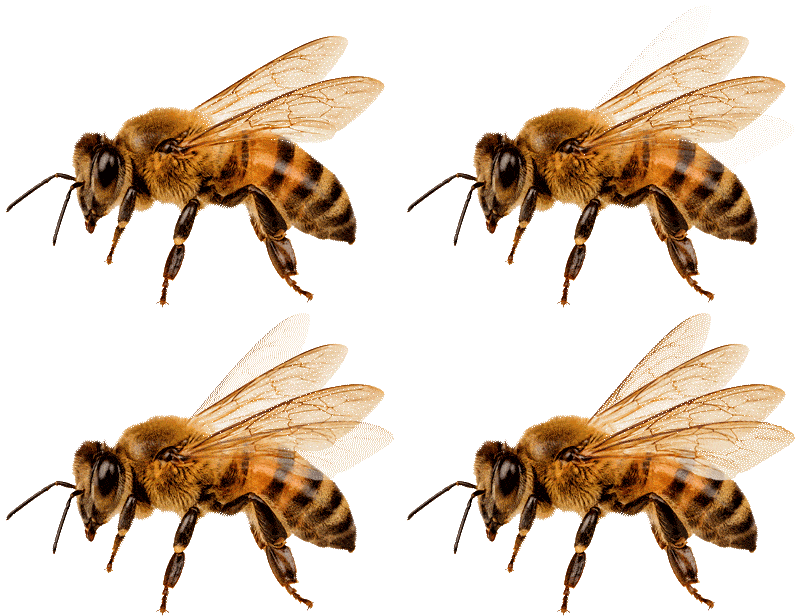

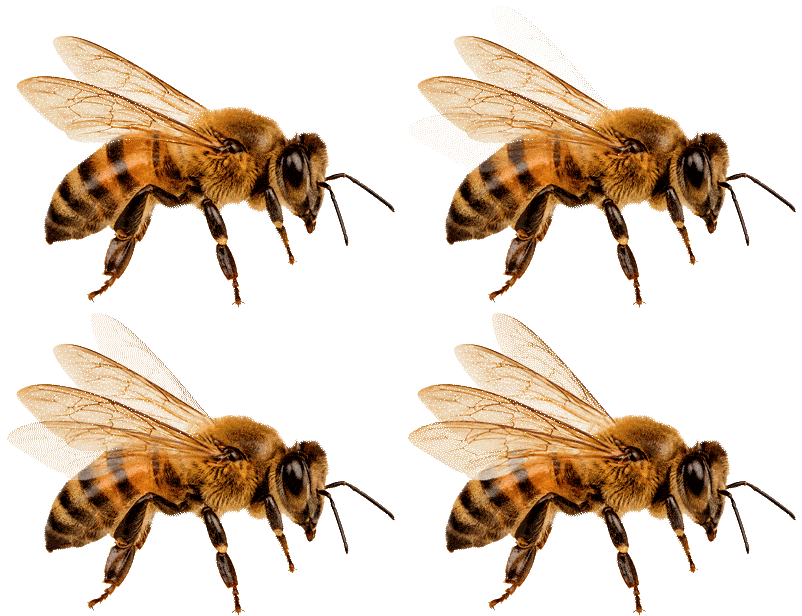
Bees and other pollinators play an important role in our environment. By pollinating a wide variety of wildflowers, plants and crops, they help support biodiversity and healthy ecosystems.
Honey bees are just one part of a much larger network of pollinators. Bumblebees, solitary bees, butterflies, moths and other insects all rely on suitable habitats that provide food and shelter throughout the year.
At East Anglia Apiaries, our bees are kept across a range of locations in the East Anglian countryside. The surrounding environment, including farmland, hedgerows, gardens and wild spaces, plays an important part in providing forage for our colonies.
Pollinators need access to a variety of nectar and pollen sources throughout the season. A diverse landscape can provide food at different times of year, helping to support bees and other wildlife.
can all provide valuable sources of food and shelter.
Creating and protecting these spaces can also benefit a wide range of insects, birds and other wildlife, helping to support greater biodiversity.

| Cookie | Duration | Description |
|---|---|---|
| cookielawinfo-checkbox-analytics | 11 months | This cookie is set by GDPR Cookie Consent plugin. The cookie is used to store the user consent for the cookies in the category "Analytics". |
| cookielawinfo-checkbox-functional | 11 months | The cookie is set by GDPR cookie consent to record the user consent for the cookies in the category "Functional". |
| cookielawinfo-checkbox-necessary | 11 months | This cookie is set by GDPR Cookie Consent plugin. The cookies is used to store the user consent for the cookies in the category "Necessary". |
| cookielawinfo-checkbox-others | 11 months | This cookie is set by GDPR Cookie Consent plugin. The cookie is used to store the user consent for the cookies in the category "Other. |
| cookielawinfo-checkbox-performance | 11 months | This cookie is set by GDPR Cookie Consent plugin. The cookie is used to store the user consent for the cookies in the category "Performance". |
| viewed_cookie_policy | 11 months | The cookie is set by the GDPR Cookie Consent plugin and is used to store whether or not user has consented to the use of cookies. It does not store any personal data. |